BANDHAVGARH FIELD NOTES · LOCAL KNOWLEDGE · RESPONSIBLE SAFARIS
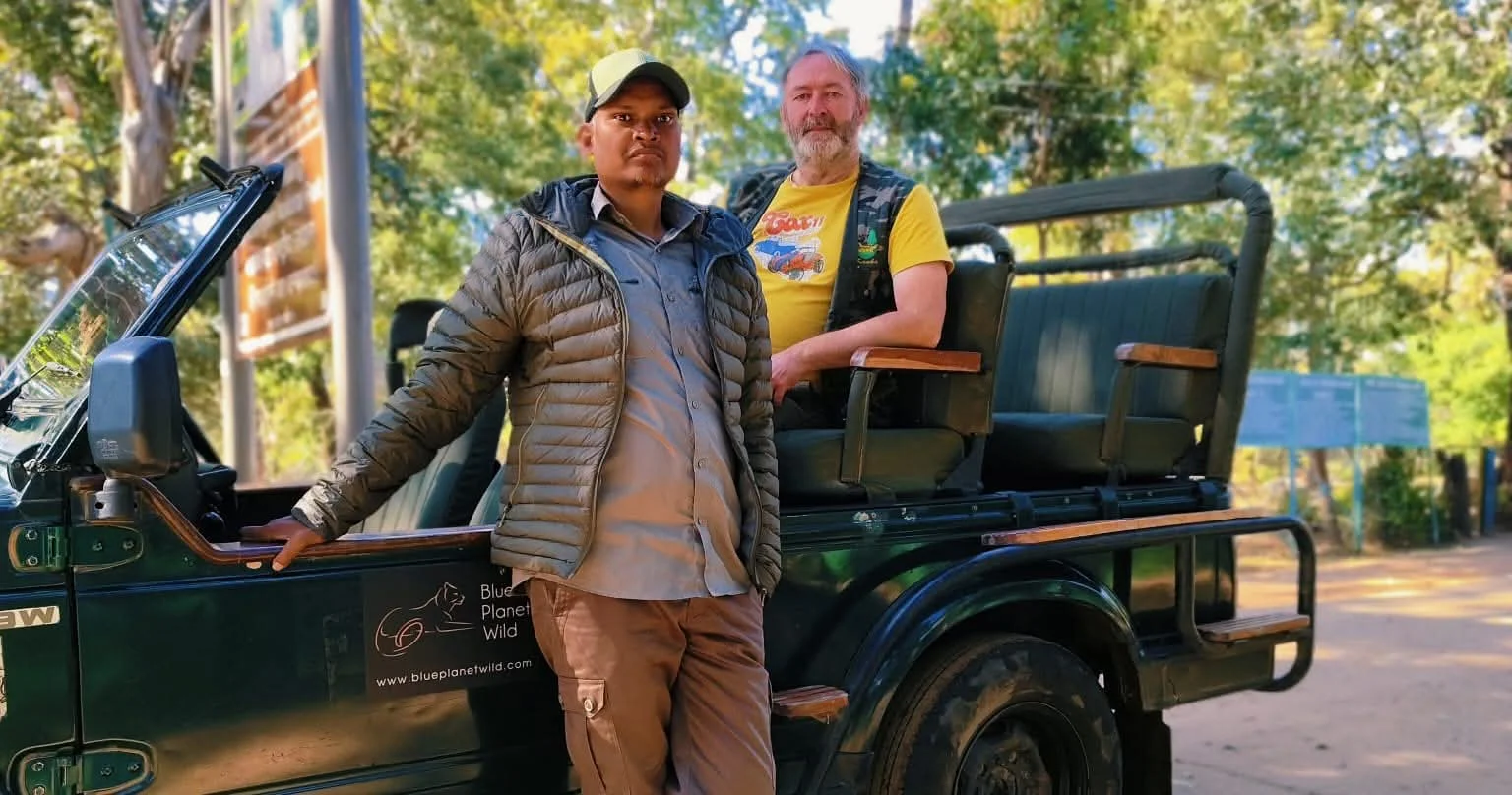
Tiger tracking in Bandhavgarh begins long before a tiger appears. A fresh print in the dust, a sambar’s warning bark or a langur watching one patch of forest can make a guide stop and listen. These signs help experienced guides build a picture of what may be happening nearby. They do not guarantee a sighting.
Tiger tracking in Bandhavgarh starts with listening
Veteran guides and local drivers spend years learning the tracks and seasons of the reserve. Their knowledge becomes most useful when several clues fit together. An alarm call can alert them to a predator, but the direction, persistence and movement of the calls matter as much as the sound itself.
A sambar often gives a deep, carrying bark. Chital can make sharp warning calls, while langurs watch from treetops and call when they notice danger. Leopards can climb trees, so a langur’s response may differ from its reaction to a tiger. However, one sound is not a reliable rule for identifying a particular predator.
| Forest clue | What a guide considers | What it cannot prove |
|---|---|---|
| Sambar or chital alarm | Direction, repetition and where the animals are looking | That a tiger will cross the safari road |
| Langurs watching one area | Predator movement below or near the trees | The species or individual without other evidence |
| Fresh tracks | Direction of travel and how weather has affected the edges | An exact time or identity from size alone |
For visitors, the best response is usually simple: stay quiet and let the guide listen. Your Bandhavgarh jeep safari becomes more rewarding when you notice the forest rather than focus only on the next photograph.
Reading tiger pugmarks and territorial signs
Along sandy roads and damp ground, guides look for pugmarks that show where a big cat has travelled. Crisp edges may suggest a relatively recent track. Wind, tyre marks, dew and soil texture can change its appearance quickly, so freshness is always an interpretation.
Adult males often leave larger prints than females, but size alone cannot confirm sex, age or identity. A complete sequence of tracks, the ground surface and other observations help a guide make a more careful assessment. Guests should never leave the vehicle to inspect a pugmark.
Scratches on tree trunks, scrapes and scent marks may reveal territorial activity. Tigers communicate without meeting face to face. These signs are one reason a quiet safari can still tell an interesting story about tiger social behaviour.
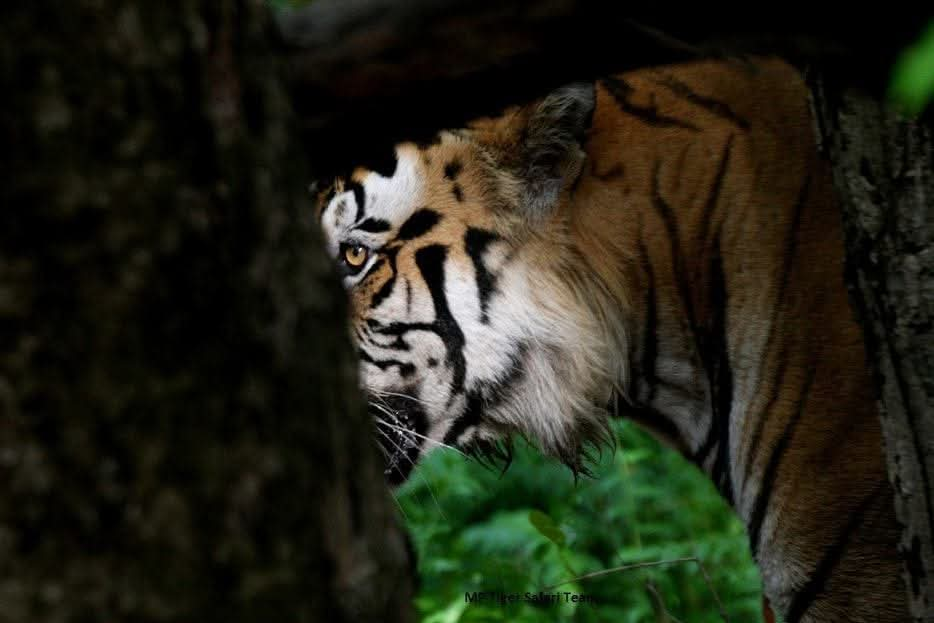
How guides connect tracks, calls and behaviour
A herd looking in the same direction can be as interesting as a loud alarm. Chital may stamp or remain unusually alert. Monkeys may pause their normal activity. Guides compare these observations with the road network and the direction in which warning calls move.
A sudden silence can have several explanations. It is a clue to consider, not proof that a tiger is about to appear. Patience, knowledge of the landscape and respect for park rules are more useful than rushing between reports.
The Tala, Magadhi and Khitauli safari zones offer different habitats and routes. No zone is automatically the best on every date. Permits, access, weather and animal movement all influence the experience.
The guide’s role and your responsibility
A Forest Department guide accompanies safari visitors and helps explain wildlife and safety rules. A lodge naturalist or tour leader may also assist with interpretation, depending on your arrangement; that role does not replace the mandatory park guide.
- Follow instructions about seating, silence and vehicle movement.
- Do not ask a driver to leave the allotted route or surround an animal.
- Keep a respectful distance from tigers and never block their path.
- Follow current rules for phones, photography and litter.
When arranging tiger photography tours, allow time for repeated drives and the wider wildlife experience. Teerath can help you combine local interpretation with practical Bandhavgarh transfers and a suitable stay.
Frequently asked questions
Can a guide guarantee a tiger sighting?
No. Guides interpret signs and use local experience, but tigers are wild animals. Sightings depend on movement, visibility, access and chance.
Which zone is best for tiger tracking in Bandhavgarh?
Tala, Magadhi and Khitauli all offer wildlife experiences. Choose available permits and a sensible lodge location rather than expecting any one zone to guarantee a tiger.
Can pugmarks identify a particular tiger?
A print can suggest direction and sometimes approximate size. Confident individual identification normally needs clearer evidence, such as recognisable stripe patterns or documented observations.
Further reading: WWF’s tiger facts and the reserve’s safari-zone information.
Plan your safari with local knowledge
Share your travel dates, group size and interests. We can help coordinate permits, accommodation and transfers.
Ask Teerath about your safari →Explore Bandhavgarh safari booking
Teerath Nath Singh
Based in Bandhavgarh, Teerath Nath Singh helps travellers explore the forests and wildlife of Central India with local knowledge and personal safari planning.
Meet Teerath Nath Singh →