If you’re heading to Bandhavgarh National Park with a camera, one thing becomes clear pretty quickly. Not all safari drives feel the same. Some zones give you clean tiger frames, some give you movement and behavior, and some surprise you with quieter subjects that end up being just as rewarding.
Most first-time visitors focus only on sightings. But if you’re into photography, the zone you’re in can shape your entire experience. Light, terrain, background, and even how long you get with a subject, all change depending on where you are.
The more you understand these small differences, the more intentional your photography becomes. It stops being about luck and starts feeling a bit more controlled.
Understanding the Safari Zones Without Overcomplicating It
Bandhavgarh has a few core safari zones, and you’ll hear the same three names come up again and again: Tala, Magadhi, and Khitauli.
Instead of thinking about them as “better” or “worse,” it helps to think of them in terms of what they naturally offer:
- One zone leans towards classic tiger imagery
- One gives you more movement and interaction
- One slows things down and opens up bird and habitat photography
All three have tigers. That part doesn’t really change. What changes is how the sighting unfolds and what kind of images you walk away with. Some drives feel fast and reactive, while others give you time to observe and wait.
Once you experience more than one zone, you start noticing how each one subtly shapes your approach behind the camera.
Tala Zone Safari: Where Tiger Photography Comes Together
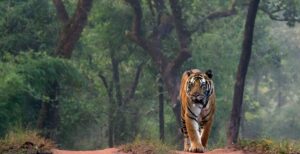
When people talk about Bandhavgarh, they’re often thinking of the Tala zone safari without realizing it. It’s the zone that most closely matches what people imagine before they arrive.
This is where you get:
- Open meadows that allow clean compositions
- Forest tracks that naturally guide movement
- Backgrounds that don’t feel cluttered
There’s also a certain familiarity here. Tigers in this zone are tracked closely, and guides often anticipate movement based on past patterns. That gives you slightly more time to prepare your shot instead of reacting at the last second.
From a photography point of view, Tala works because things line up well. Light filters through in a softer way during early hours, and when a tiger steps out, it often does so in a space where you can actually frame it properly. Even when sightings are brief, they tend to feel more usable from a photography standpoint.
That’s why many photographers prefer doing more than one Tala zone safari, especially if their main goal is to come back with strong tiger portraits that feel complete and well-composed.
Magadhi Zone Safari: More Movement, More Moments
Magadhi zone safari feels a bit more active. You’ll notice it in the pace of the drive and the kind of sightings you come across. There’s a sense that something could happen at any moment.
This zone is known for:
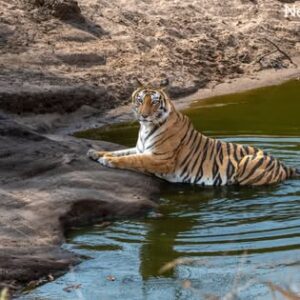
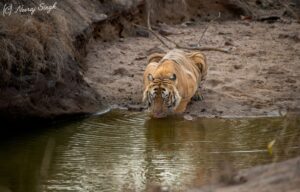
- Frequent movement around water sources
- Slightly more open terrain in patches
- Encounters that feel less static
Instead of a tiger sitting or resting, you’re more likely to see one walking, crossing, or interacting with its surroundings. That makes a big difference if you enjoy capturing behavior rather than just portraits.
There’s also less pressure here compared to Tala. Fewer vehicles in many cases, a bit more breathing space, and that can give you extra seconds to adjust your composition. You’re not always competing for a position, which can make a surprising difference when things unfold quickly.
If Tala is about getting “the shot,” Magadhi is about getting a sequence of moments. Doing more than one Magadhi zone safari often helps you build a fuller story instead of relying on a single frame.
Khitauli Zone Safari: Slower, Quieter, Surprisingly Rewarding
Khitauli zone safari doesn’t always get the same attention, but it has its own rhythm. It feels calmer right from the start, and that changes how you experience the forest.
The terrain here opens up in places, and the forest feels less dense. That changes what you end up focusing on.
This zone is especially good for:
- Bird photography
- Smaller wildlife and natural behavior
- Cleaner, minimal backgrounds
You’re not constantly chasing big cat movement here. Instead, the safari feels slower, which can actually work in your favor. You start noticing details, a bird call, a change in light, an animal moving through grass rather than across a road.
And when a tiger does show up, it often feels less crowded and more personal. There’s usually more space to observe and react without pressure.
Spending time on a Khitauli zone safari adds a different layer to your trip. It balances out the intensity of other zones and reminds you that there’s more to photograph than just the big cats.
Conclusion
A Bandhavgarh safari isn’t just about ticking off a tiger sighting. It’s about understanding how each zone shapes what you see and how you shoot.
Tala gives you structure and strong compositions. Magadhi adds movement and unpredictability. Khitauli slows things down and opens your eyes to everything else. Each zone builds on the other, and together they create a more complete experience.
If you plan your safaris across different zones, you don’t just increase your chances, you walk away with a much more complete set of images. And that’s what makes the experience truly worth it.