BANDHAVGARH FIELD NOTES · LOCAL KNOWLEDGE · RESPONSIBLE SAFARIS
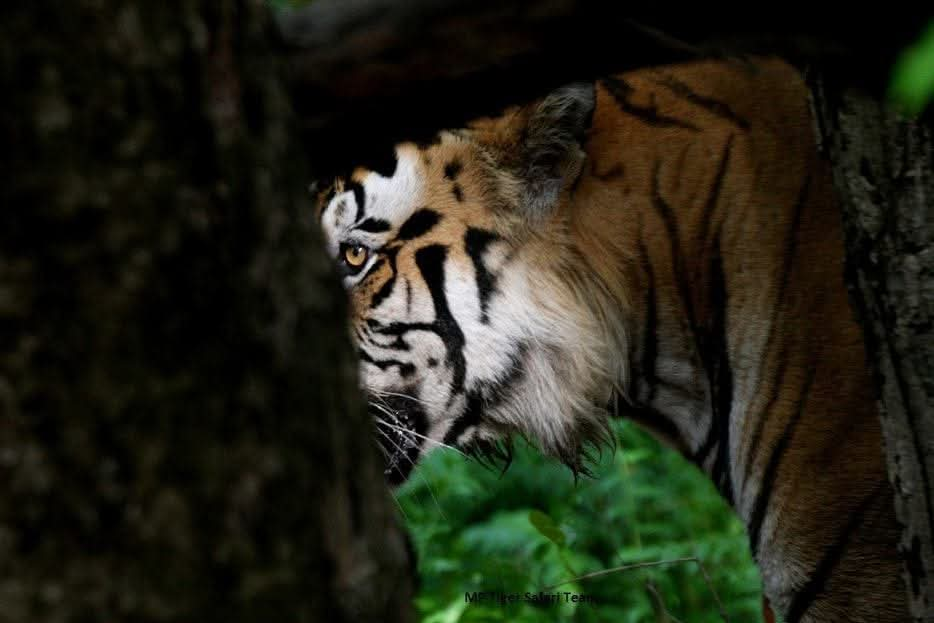
Bandhavgarh tiger territory is a living, changing part of the forest. Tigers use scent, sound and familiar routes to communicate their presence. A safari may reveal a solitary adult, a mother with cubs or a brief association between adults. These observations are fascinating, but they should not be mistaken for permanent family groups or fixed boundaries.
The stories behind Bandhavgarh’s famous tigers
Bandhavgarh has a strong place in India’s wildlife storytelling. Visitors still hear about Charger, Sita, B2 and Bamera, and the guides who watched them across many seasons. These histories make Bandhavgarh’s famous tigers more than names on a checklist.
Each tiger’s stripe pattern is distinctive. Reliable identification uses photographs and documented observations, rather than a distant shape or a footprint alone. A local guide may recognise an individual quickly, while researchers use more systematic records to study populations and movement.
Why Bandhavgarh tiger territory changes
Food, water, breeding opportunities and competition influence where a tiger spends its time. Adult males generally range across larger areas than females, and a male’s range may overlap those of several females. These patterns are part of tiger social behaviour; they are not a map that stays the same every season.
A younger adult may explore beyond its mother’s range. An older animal may lose access to a familiar area. A new male can alter the relationships between neighbouring tigers. Not every change involves a fight witnessed by guides, and a single sighting does not prove a takeover.
A territory is not a safari zone. Tala, Magadhi and Khitauli are tourism-management areas. Tigers do not follow the boundaries printed on a visitor’s permit.
Scent spraying, scrapes, claw marks and calls help tigers signal their presence. A guide combines these signs with recent observations to explain the forest. Read more about tiger facts before your drive so the quieter moments become easier to appreciate.
Mothers, cubs and the meaning of a tiger family
The strongest long-term association is usually between a mother and her dependent cubs. She provides food and protection while they develop the skills needed to survive. Cubs gradually progress from staying hidden to following their mother, playing and learning to approach prey.
Young tigers generally become independent over roughly two to three years, although development and dispersal vary. Females may settle relatively near their mother’s range, while males often travel farther. Leaving a familiar area is one of the most difficult stages of a young tiger’s life.
Adults can sometimes be seen resting or feeding near familiar females and cubs. Such tolerance is interesting, but it does not mean males routinely babysit cubs or that tigers live like lion prides. A new male may pose a serious danger to dependent cubs.
The life cycle of a tiger helps explain why the same family may look very different when you return the following year.
What the core zones can teach you
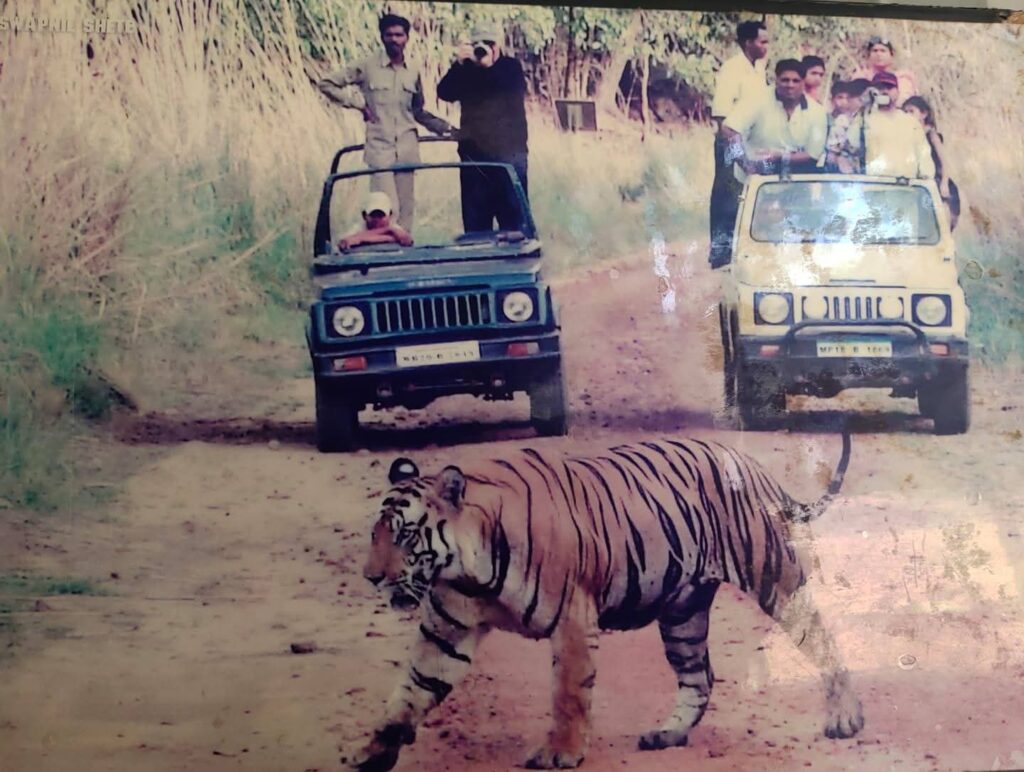
The core zones of Tala, Magadhi and Khitauli contain different routes, habitats and viewing opportunities. Guides may share recent, dated observations from the route you are permitted to visit. Ask when an observation was made rather than treating an old social-media report as the current position.
Names such as Bajrang, Dotty and other locally known tigers appear in visitor stories, but current residence, cub status and territorial outcomes need fresh verification. This article does not publish an unverified 2026–27 ownership map or confirm a named tiger’s death from informal reports.
Choose a safari for its forest and wildlife experience, not a promise to locate a particular tiger. Book your Bandhavgarh safari with enough time for permits and a suitable lodge location.
Responsible viewing around cubs
- Remain seated and follow the guide’s instructions.
- Do not surround a family or block the route between mother and cubs.
- Keep noise low and avoid drawing an animal’s attention for a photograph.
- Respect restrictions on sharing sensitive wildlife locations.
A patient visitor may learn as much from a tiger walking away as from a close photograph. Teerath’s local guiding background can help you connect the encounter to the wider forest story.
Frequently asked questions
Why do tiger territories change?
Prey, breeding, competition and dispersal all play a role. Repeated observations are needed to understand a change; a single sighting is not a reliable boundary map.
Do cubs stay with both parents?
Mothers raise dependent cubs. Some adult males tolerate familiar females and cubs, but tigers are generally solitary and do not form permanent prides.
Can I book a safari to see one named tiger?
You can choose available permits and discuss your interests, but no operator can guarantee a particular individual or any tiger sighting.
Further reading: WWF tiger biology, Smithsonian tiger development and official reserve zones.
Plan your safari with local knowledge
Share your travel dates, group size and interests. We can help coordinate permits, accommodation and transfers.
Ask Teerath about your safari →Explore Bandhavgarh safari booking
Teerath Nath Singh
Based in Bandhavgarh, Teerath Nath Singh helps travellers explore the forests and wildlife of Central India with local knowledge and personal safari planning.
Meet Teerath Nath Singh →