The best time to visit Bandhavgarh really depends on one thing, what kind of shots you’re chasing. If you’re dreaming of that sharp, eye-level tiger frame, timing matters a lot more than comfort.
Tucked inside Madhya Pradesh, Bandhavgarh National Park is one of those rare parks where tiger sightings are not just possible, they’re frequent. But every season here tells a different story through your lens.
Some months are about patience and atmosphere, while others are about action and clear sightings. Understanding this difference helps you plan a trip that actually matches your expectations.
Seasons Overview: What the Bandhavgarh Safari Season Looks Like
Bandhavgarh is open from October to June, and you can broadly split the safari season into two main phases:
- October to February (Winter): Cooler days, greener forests, softer visuals
- March to June (Summer): Dry terrain, harsher light, but far better tiger visibility
The park shuts down during the monsoon, giving the forest time to reset. When it reopens, everything feels fresh, but not always ideal for photography, especially if tigers are your focus.
Early-season safaris can feel slightly unpredictable because animals are spread out. As the months pass, the forest slowly becomes easier to read for both guides and photographers.
Winter Photography (October to February)
Winter in Bandhavgarh is easy to like. The weather is comfortable, mornings are slightly chilly, and the forest still carries that post-monsoon freshness.
From a photography point of view, this season gives you:
- Gentle, diffused light, great for moodier frames
- Rich green backdrops that add depth
- Plenty of birdlife and herbivores are moving around
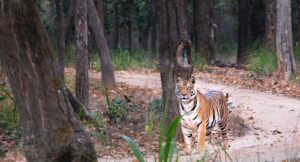
But here’s the catch: tigers can be harder to spot clearly. The forest is thicker, and even when you do find one, it’s often partially hidden behind foliage.
This season is the best time to visit Bandhavgarh if you enjoy photographing behavior and the environment together. It also gives you more variety beyond just big cats, which many photographers appreciate.
Summer Tiger Sightings (March to June)
As summer kicks in, Bandhavgarh changes fast. The greens fade, water sources shrink, and the entire forest starts to feel more open.
And that’s exactly what photographers wait for.
During these months:
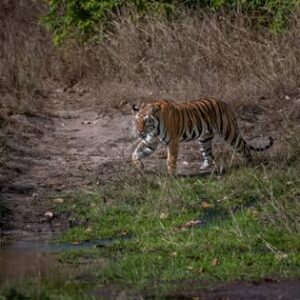
- Tigers stick close to waterholes
- Visibility improves as vegetation dries out
- Sightings become more consistent and often closer
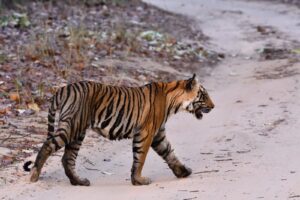
Yes, it gets hot. Really hot. But the trade-off is worth it. This is when you’re most likely to see a tiger walking down a dusty track or sitting by a water source, completely unfazed.
The dry terrain also makes it easier to anticipate movement, which helps you prepare your framing in advance. Even the light feels stronger and more dramatic, adding intensity to your images.
Why March-May Is the Sweet Spot for Tiger Photography
If your goal is clear that you really want those strong tiger photography India shots, then March to May is easily the best time to visit Bandhavgarh.
Here’s why this window works so well:
- Animals have predictable movement patterns around water
- You get that beautiful golden light during safaris
- Backgrounds are simpler, so your subject stands out more
- Chances of repeat sightings go up, which means more time to frame your shot properly
It’s not the most comfortable time to travel, but from a photography standpoint, it’s the most rewarding. You also get more opportunities to observe natural behavior rather than quick, fleeting sightings.
Many photographers return during this window year after year because of the consistency it offers.
Travel Tips for European Visitors
If you’re coming from Europe, a bit of planning goes a long way here.
- Stay at least 3 to 4 days: One or two safaris won’t cut it
- Book your safari zones early: Tala, Magadhi, and Khitauli are the main ones
- Go for morning drives: Better light, better activity
- Pack light but smart: Neutral clothes, good shoes, and something to cover dust
- Camera gear: A 300mm+ lens is ideal; anything less can feel limiting
For travel, the easiest route is flying into Jabalpur or Khajuraho and then driving to the park. It’s also worth planning buffer time for delays, especially if you have fixed safari bookings.
Choosing a good lodge with experienced naturalists can quietly make a big difference to your overall experience.
Conclusion
So, what’s the best time to visit Bandhavgarh? If you want comfort and variety, winter does the job. But if you’re here for tigers, and especially for photography, summer, particularly March to May, is where the magic happens.
It’s a bit harsher, a bit more demanding, but that’s exactly what makes the experience and the photos worth it. You come back not just with images, but with moments that feel earned. And that’s really what wildlife photography here is all about.
FAQs
- What is the best time to visit Bandhavgarh for tiger sightings?
March to May is considered the best time because tigers frequently visit water sources and are easier to spot. The dry forest also improves visibility, making sightings more consistent.
- Is winter a good time for wildlife photography in Bandhavgarh?
Yes, winter offers beautiful light and lush landscapes, which work well for overall wildlife photography. However, tiger sightings can be less clear due to dense vegetation.
- How many safaris are enough for good tiger photography?
You should plan at least 5 to 6 safaris over 3 to 4 days for better chances. More time in the park simply increases your odds and gives you flexibility with sightings.
- Which zones are best for photography in Bandhavgarh?
Tala, Magadhi, and Khitauli are the main zones, and all have good tiger movement. Tala is often preferred for its scenic backdrops, while the others can surprise you with equally strong sightings.
- What camera gear is ideal for Bandhavgarh safaris?
A telephoto lens of at least 300mm is recommended for close and detailed shots. Carry extra batteries, memory cards, and basic dust protection since conditions can be rough.