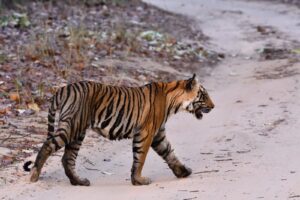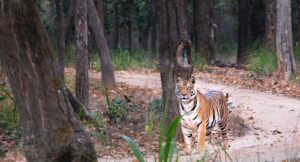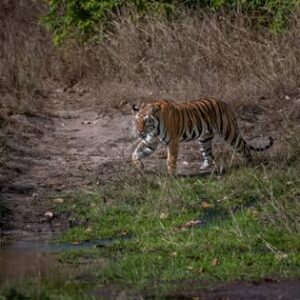
For years, visitors entering Bandhavgarh National Park hoped for one particular sighting. Not just any tiger, but Pujari.
The Bandhavgarh Pujari Tiger had become one of the reserve’s most recognizable faces over time.
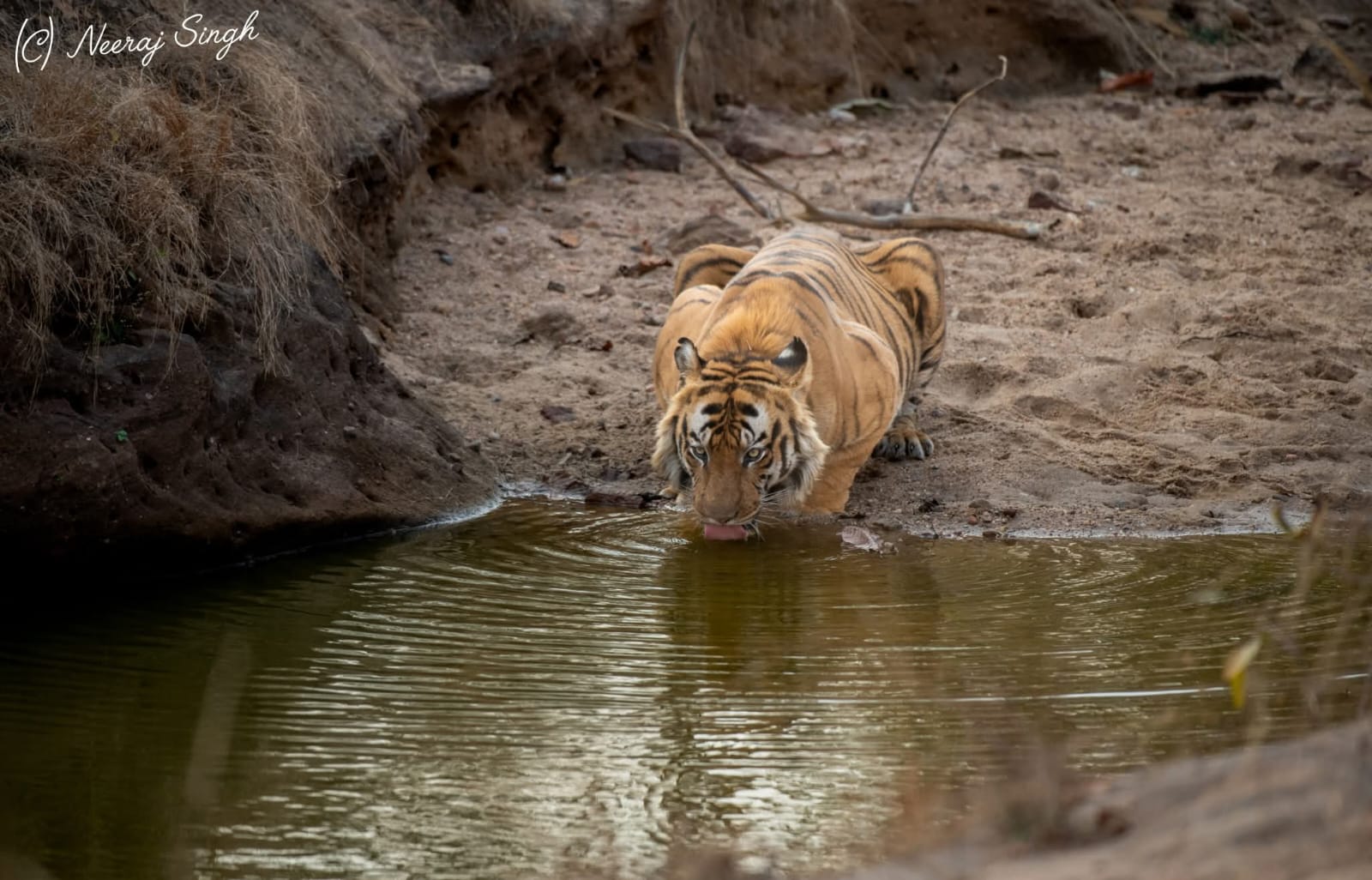
Guides knew his movement patterns, photographers waited for hours around his territory, and tourists often returned from safaris talking about the same thing, the way he would calmly step into a waterhole before disappearing back into the forest.
Now, according to forest officials, that familiar presence is gone.
Pujari Tiger Found Dead in Khitauli Range
The 10-year-old Bandhavgarh Pujari Tiger was reportedly found dead in the Dhamdhama area of Bandhavgarh’s Khitauli range in Umaria district earlier this week.
Officials said field staff had heard roaring and signs of conflict between two tigers during the night. By the next morning, a search operation was launched, eventually leading teams to the carcass.
Preliminary observations suggest a territorial clash may have caused the death. Authorities also stated that the body showed attack marks, though all body parts remained intact.
A post-mortem examination is currently being conducted as part of the official investigation.
Why the Bandhavgarh Pujari Tiger Was So Well Known
Not every tiger becomes recognizable to tourists. Most are seen briefly, sometimes only once.
Pujari was different.
He had a routine people remembered. According to guides and visitors, he was often seen stopping at a waterhole before continuing through the forest. Over time, that small habit became part of his identity.
And that’s really how the Bandhavgarh Pujari Tiger became famous. Not through aggression or dramatic encounters, but through familiarity.
Safari drivers knew where he liked to move. Wildlife photographers had favorite frames of him. Repeat visitors asked about him by name.
In a place filled with wildlife, he somehow became personal to many people.
The Story Behind the Bandhavgarh Pujari Tiger
The Bandhavgarh Pujari Tiger was mostly seen around the Khitauli zone and the nearby Panpatha buffer area. Over time, he became one of the dominant male tigers controlling a large territory in that part of the forest.
Like many strong males in Bandhavgarh, his life was shaped by territorial conflicts. One major incident linked to Pujari involved tigress Tara’s cubs, which were reportedly killed after he took over the area. While harsh, such behavior is considered part of natural territorial takeover among male tigers.
Later, Pujari entered into a serious conflict with another male tiger, D1. The territorial battle reportedly continued for several days, with repeated encounters and injuries. Eventually, Pujari lost the fight, and D1 became dominant in that region.
For many safari guides and wildlife followers, these stories are part of what made the Bandhavgarh Pujari Tiger such a well-known figure inside the reserve.
Why News Like This Hits Tourists So Hard
People who regularly visit tiger reserves understand something unusual about wildlife tourism. You don’t fully “know” these animals, but after repeated sightings, it starts to feel that way.
That’s especially true with long-term dominant males like the Bandhavgarh Pujari Tiger.
Photographers tracked his movements across seasons. Safari guides built stories around him. Travelers from different parts of the world recognized him from photos long before arriving at Bandhavgarh.
So when a tiger like that disappears, it affects more than just the ecosystem narrative. It leaves a strange gap in the experience people associate with the forest itself.
A Reminder of What the Wild Really Means
It’s easy to romanticize tiger reserves through photographs and safari stories. But moments like this remind people that these forests are still genuinely wild.
There are no guarantees inside the jungle, not for sightings, not for survival.
The same forest that gives unforgettable moments to visitors also follows its own harsh balance. Dominance changes, territories shift, and even well-known tigers eventually disappear from the landscape.
For many visitors, the Bandhavgarh Pujari Tiger was part of what made the reserve memorable. His death marks the end of a familiar chapter in the forest, one that countless safari-goers quietly became attached to over the years.